









Turnkey Solution for limestone Storage
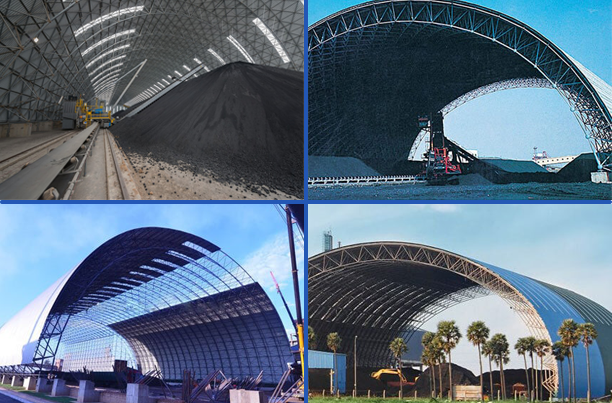
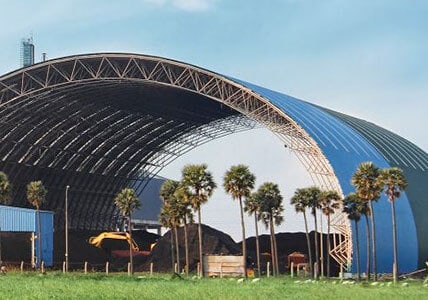
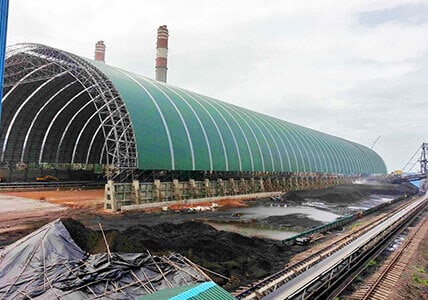
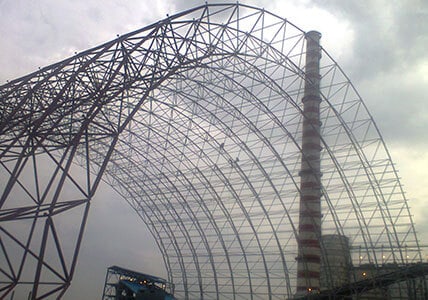
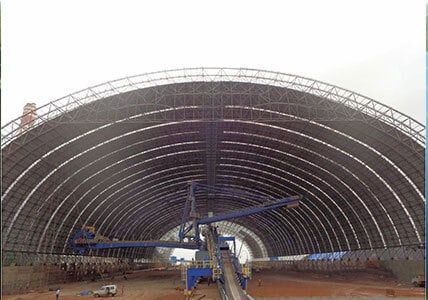
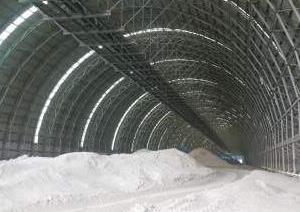
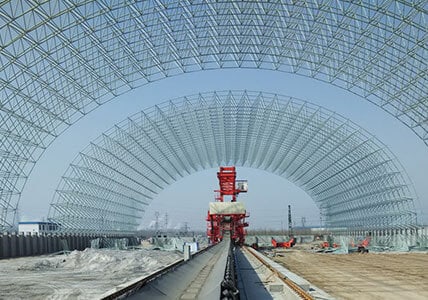
Hindustan Alcox specializes in storage solutions for limestone with long span steel structure having span of up to 150m & height of up to 40m. Limestone storage shed, engineered by Alcox is the best choice to cover stockpile for the most challenging environment. In cement plant, Clinker storage sheds or Limestone storage sheds are often built over operating stockpiles so that construction may proceed without interrupting operations.
As an alternative to barrel vault structure, Limestone dome also provides an opportunity to achieve good plant efficiency by maximum space utilization and hasty operational works. Hindustan Alcox customizes limestone domes after practically emphasizing the durability, strength and technical feasibility of structure with optimum space utilization. Flexibility of limestone domes can be seen by its capability to cater optimum space utility for storing limestone along with other fertilizers sharing the same space. Limestone storage dome, stockpile and shed manufacturer, installation and all solutions from last over 50 years in India and worldwide with assurance of quality.
OTHER APPLICATIONS OF OUR STRUCTURES
CLINKER STORAGE
Clinker consists of various calcium silicates including alite and belite. Tricalcium aluminate and calcium aluminoferrite are other common components. These components are often generated in situ by heating various clays and limestone.
Clinker consists essentially of four minerals:
- Alite: approximately tricalcium silicate (typically about 65% of the total)
- Belite: approximately dicalcium silicate (typically about 15% of the total)
- Tricalcium Aluminate: Typically about 7% of the total
- Tetracalcium Aluminoferrite: Typically about 8% of the total
Cement is caustic, so it can cause chemical burns. The powder can cause irritation or, with severe exposure, lung cancer and can contain some hazardous components such as crystalline silica and hexavalent chromium . Environmental concerns are the high energy consumption required to mine, manufacture, and transport the cement and the related air pollution, including the release of greenhouse gases (e.g., carbon dioxide), dioxin, NOx , SO2 , and particulates. Therefore, it is essential that clinker should be properly stored in covered sheds.
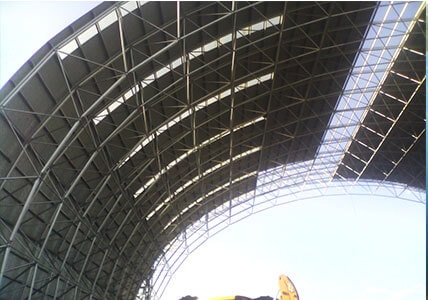
The construction systems uses mild steel in case of clinker storage, no welding is required because the connection of the member consists of a very efficient moment-resistant mechanical joint. Clinker storage shed may be built in single- or double-layer configurations, depending on the load and span. Experience suggests large spans are required in clinker storage , a-double-layer is the most cost-effective Clinker storage sheds are often built over operating stockpiles since construction can proceed without interrupting operations. Because our erection process does not require machines to be installed internal periphery of the span.
GYPSUM STORAGE
A soft white or gray mineral consisting of hydrated calcium sulfate. It occurs chiefly in sedimentary deposits and is used to make plaster of Paris and fertilizers, and in the building industry. Gypsum, a white mineral soft enough to be scratched with a fingernail, is hydrated calcium sulfate [Ca(SO4) 2H2O]. Gypsum often begins as calcium sulfate dissolved in an isolated body of salt water. As the water evaporates, the calcium sulfate becomes so concentrated that it can no longer remain in solution and crystallizes out (precipitates) as gypsum. Many large beds of gypsum have been formed in this way.
Gypsum occurs in a number of distinct forms, including a clear, parallelogram-shaped crystal (selenite); a white, amorphous form (alabaster, used for ornamental carving); and a fibrous, lustrous form (satin spar, used in jewelry). When ground up and heated to drive off its water, gypsum becomes a powder termed plaster of Paris. Plaster of Paris has the useful property of hardening in any desired shape when mixed with water, molded, and allowed to dry. Gypsum is one of the most widely used minerals in the world. Some 90 countries mine gypsum, producing more than 100 million tons (91 million metric tons) annually. The construction industry has long been particularly gypsum intensive. In the late nineteenth and early twentieth century’s gypsum was widely used in plastering, which since the 1950s has been displaced by gypsum drywall (sheetrock). Gypsum is also an ingredient in Portland cement, which used in the construction of bridges, buildings, highways and millions of tons of gypsum used annually as fertilizer. Small quantities of pure gypsum are essential in smelting, glassmaking, and other industries.
We want to make Gypsum storage easy for you; we proved long span steel structure for your gypsum pile
We would like to propose Large Span Steel Shed, which can be used to cover gypsum; it can built with a span of up to 150 m and height of up to 40 m.
Gypsum storage sheds are often built over operating stockpiles since construction can proceed without interrupting operations. Because our erection process does not require machines to be installed internal periphery of the span.
IRON ORE STORAGE
Our Iron Ore Storage Structure is fully Complying with new environmental regulations for air quality, Prevention and control of fugitive emission. Instead of investing in temporary solution, it is recommended to adopt permanent solution. Our solutions presented here not only allow affordable compliance, but also enhance the reputation of your plant. In addition, one time investment is much more economical than the periodic investments
LIGNITE STORAGE
Lignite-generated electricity is abundant, low-cost, reliable and environmentally compatible.”
Lignite is a dark brown to black combustible mineral formed over millions of years by the partial decomposition of plant material subject to increased pressure and temperature in an airless atmosphere. In simple terms, lignite, often referred to as brown coal, is a soft brown combustible sedimentary rock formed from naturally compressed peat. It is considered the lowest rank of coal due to its relatively low heat content. It has a carbon content around 25-35%.
Lignite is brownish-black in color and has a carbon content around 25-35%, a high inherent moisture content sometimes as high as 66%, and an ash content ranging from 6% to 19% compared with 6% to 12% for bituminous coal We would like to propose Large Span Steel Shed, which can be used to cover lignite; it can built with a span of up to 150 m and height of up to 40 m.The construction systems uses mild steel in case of lignite storage, no welding is required because the connection of the member consists of a very efficient moment-resistant mechanical joint. Lignite storage shed may be built in single- or double-layer configurations, depending on the load and span. Experience suggests large spans are required in lignite storage , a-double-layer is the most cost-effective. Lignite storage sheds are often built over operating stockpiles since construction can proceed without interrupting operations. Because our erection process does not require machines to be installed internal periphery of the span.
ADDITIVE STORAGE
Additives are chemicals and materials blended into base cement slurries to alter the performance of the cement. Due to the inherent nature of base cements (Neat, Portland and Pozzolanic) and because of the demands placed on the cement cover throughout the life of the structure, the performance properties of the cementing slurry are modified to address the specific and unique conditions of each structure.
Additives are used to enhance cement slurries in all wellbore conditions. Variations in additive concentration may cause significant changes in thickening time, compressive strength, and viscosity, so determining the optimum balance of additives to achieve a reliable annular seal, particularly in extreme or corrosive down hole conditions, can be complex. Thus, field-proven technical solutions, laboratory-driven empirical data from analytical tests, and finite element analysis models play an important role when engineering an optimized slurry blend Additive storage sheds are often built over operating stockpiles since construction can proceed without interrupting operations. Because our erection process does not require machines to be installed internal periphery of the span.
Product Gallery
PRODUCTS & SERVICES


Airports
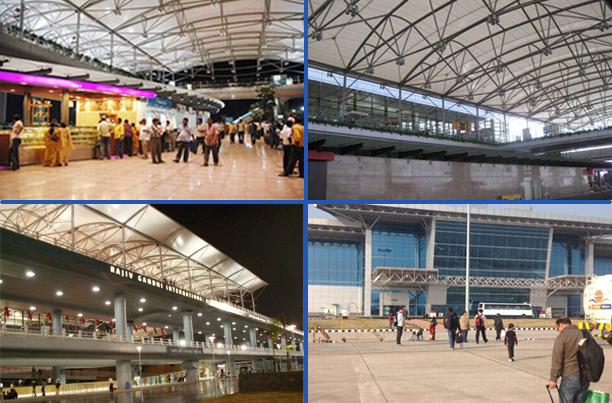
The integrated terminal buildings are designed with number of structural innovations. The key feature of airport structure is their long span roof covering with massive column spacing. The mega columns and large cantilevers make the structure unique. By using modular space frame structure supported by cantilevered columns makes the roof aesthetically good with doubly curved.
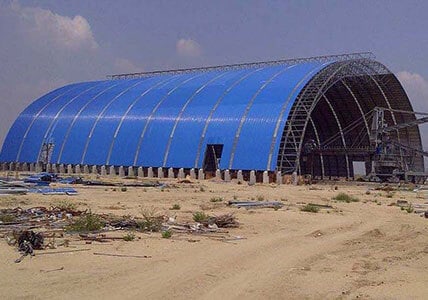
Bulk Storage Sheds
Bulk storage sheds are large span structure to accommodate tons of coals for continuous supply to the boilers.The structures are designed with modular space frame to make it cost effective compared to other conventional structures. Catwalks, ducts and other services can be accommodated within the top and bottom chords.
Space Frames
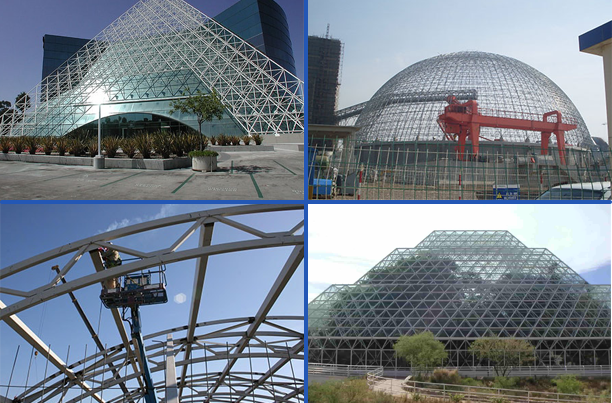
A space frame is a three-dimensional structure. The 3D behavior ensures optimum utilization of material. The quality of roofing is exceptionally good, as the deflections are almost negligible. Despite their light weight, these structures are designed to carry much heavier loads and have a huge spanning capacity. Erection time is minimal as the material is pre-fabricated from the factory.
Multi-Storey Buildings
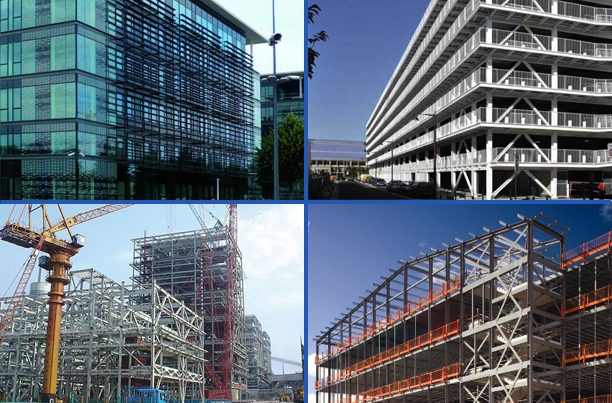
Steel frames construction is a very popular structural form for multi storey buildings as it provides great flexibility. The structure has adequate strength and stiffness to resist the applied loads due to gravity and wind. The function of the structure in resisting vertical loads due to gravity and horizontal loads due to wind is generally considered separately.
Pre-Engineered Buildings
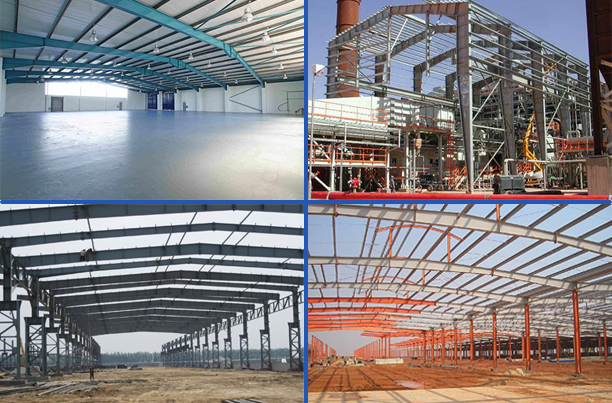
It offers a futuristic solution for creating durable and efficient structures in a cost-effective manner. Apart from great flexibility of designing and minimal construction time offered by PEB’s, they are also preferred for their robustness and durability. Moreover, it is possible to add a wide range of structural and non-structural components, which enhances their aesthetic appeal and also improves their usability.
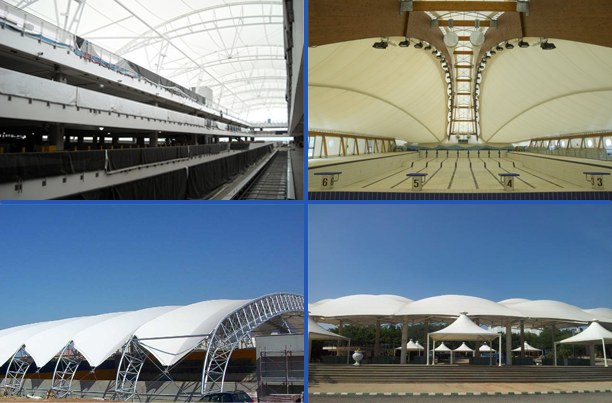
Membrane Structures
Textile supported by steel combines the high flexibility of use of this one, from reticular arches to infinite space geometries, with a singular covering applied only under optimum conditions in order to avoid abrasion and corrosion due to contact with the main bearing structure. The all-season use is guaranteed by a singular system of side opening in order to obtain maximum ventilation in the hot season.
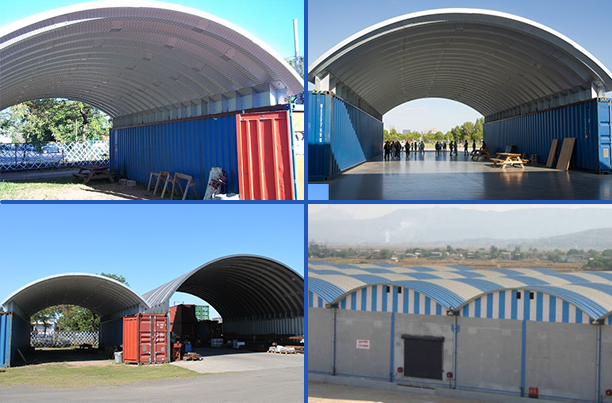
Self Supporting Roofs
A self-supporting roofing system makes it possible to erect a warehouse in one span without trusses, purlins, and rafters. The systems are mechanically sealed, which ensures better weather proofing and a hygienic and clean environment. The absence of holes, nuts, bolts, overlaps, or sealants, these structures require minimal to zero maintenance, making them highly cost-efficient.